
The air inside a commercial building tells a story that most people never think about. Workers arrive each morning, settle into their offices, and breathe in thousands of cubic feet of air over the course of a day without giving it a second thought. Yet the quality of that air has a profound and measurable effect on their health, their productivity, and their overall wellbeing. As building managers and business owners become more attuned to workplace wellness, indoor air quality has moved from a background concern to a front-and-center priority.
Commercial buildings present unique air quality challenges that residential spaces simply do not face. Higher occupancy rates, complex HVAC systems, industrial-grade equipment, cleaning chemicals, and the sheer volume of foot traffic all contribute to an indoor environment that can become polluted in ways that are invisible to the naked eye. Poor ventilation traps carbon dioxide, volatile organic compounds (VOCs), and airborne particulates inside, creating an environment where workers feel sluggish, experience headaches, or develop respiratory symptoms without ever connecting those issues to the air around them.
Investing in HVAC and air quality services is no longer optional for commercial spaces that want to remain competitive, compliant, and healthy. It is a foundational part of responsible building management.
Common Air Quality Pollutants Found in Commercial Spaces
Understanding what is actually circulating through a commercial building is the first step toward fixing it. Many building managers are surprised to learn just how many pollutant sources exist in a typical office, warehouse, or retail environment.
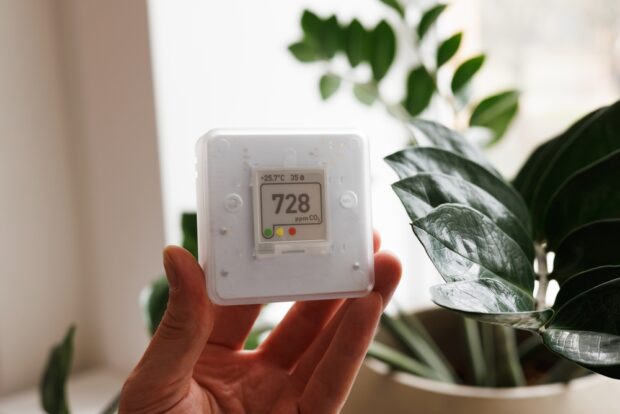
VOCs are among the most common offenders. These compounds are released from paint, adhesives, carpeting, cleaning products, and office furniture. At low concentrations, VOCs can cause eye irritation, headaches, and fatigue. At higher concentrations, particularly in poorly ventilated spaces, long-term exposure has been linked to more serious health outcomes. Carbon dioxide buildup is another concern. In densely occupied meeting rooms or open floor plans with inadequate fresh air circulation, CO2 levels can rise quickly, leading to a noticeable drop in cognitive function and alertness among employees.
Mold and biological contaminants are a persistent problem in commercial buildings, especially those with older HVAC systems or moisture control issues. Mold spores travel through the air and can trigger allergic reactions, asthma attacks, and chronic respiratory conditions. Dust mites, pollen, and other allergens also find their way indoors, accumulating in ductwork and filters that are not cleaned or replaced on a consistent schedule. Fine particulate matter, often referred to as PM2.5, is small enough to penetrate deep into the lungs and has been associated with cardiovascular and respiratory diseases.
Each of these pollutants represents a reason why comprehensive HVAC and air quality services are not just about comfort but about genuine health protection for everyone inside the building.
How HVAC Systems Influence Air Quality
The HVAC system is the lungs of any commercial building. When it is functioning properly, it filters contaminants, regulates humidity, and cycles fresh outdoor air into the space. When it is neglected, it becomes a liability, circulating pollutants rather than removing them.
A well-designed and properly maintained HVAC system does several things simultaneously. It dilutes indoor air pollutants by introducing outside air, it filters particulates through high-quality air filters, and it controls humidity levels to prevent the conditions that allow mold and biological growth to thrive. The effectiveness of all three functions depends heavily on regular maintenance, the quality of components used, and whether the system is appropriately sized for the building it serves.
Older commercial HVAC systems often lack the filtration capacity to handle the demands of modern buildings. Many were designed before the widespread use of the synthetic materials and chemical compounds that now populate commercial spaces. Upgrading filtration to MERV-rated or HEPA filters, adding UV-C light systems to neutralize biological contaminants, and installing CO2 sensors to monitor ventilation effectiveness are all strategies that experienced HVAC and air quality services providers can implement to bring older systems up to contemporary standards.
Duct cleaning is another component that is frequently overlooked. Ducts accumulate dust, mold, and debris over time. Every time the system cycles on, those accumulated particles get pushed into occupied spaces. Routine duct inspection and cleaning, as part of a broader HVAC maintenance program, significantly reduces the indoor pollutant load and extends the life of the system itself.
The Business Case for Investing in Air Quality
Beyond the health argument, there is a compelling financial and operational case for prioritizing indoor air quality in commercial buildings. Research consistently demonstrates that better air quality translates directly into measurable business outcomes.
Productivity is one of the most significant areas of impact. Studies conducted in controlled office environments have shown that workers in spaces with optimized ventilation and lower concentrations of pollutants perform measurably better on cognitive tasks. The gains are not marginal. Better air quality has been linked to improvements in decision-making, task performance, and response times. When a business considers that personnel costs typically represent the largest share of operating expenses, even modest productivity gains represent a significant return on the investment made in air quality improvements.
Employee absenteeism is another area where the financial impact becomes visible. Workers in buildings with poor air quality take more sick days, file more health complaints, and are more likely to experience the constellation of symptoms known as sick building syndrome. Addressing the root causes through HVAC and air quality services reduces this absenteeism, lowers health-related costs, and contributes to a more stable and satisfied workforce.
There are also regulatory and liability considerations. Many jurisdictions have codes and standards governing minimum ventilation rates and indoor air quality requirements for commercial buildings. Failing to meet those standards can result in fines, tenant disputes, and in serious cases, litigation. Proactive investment in air quality management is also a form of risk mitigation that protects building owners and operators from costly legal and compliance issues down the road.
Finally, indoor air quality has become an important factor in attracting and retaining tenants and employees. As wellness programs and healthy workplace certifications like LEED and WELL become more mainstream, businesses that can demonstrate a commitment to clean indoor air gain a genuine competitive advantage in the marketplace.
Strategies for Improving Indoor Air Quality in Commercial Buildings
Improving indoor air quality in a commercial building is not a single intervention. It is an ongoing program of monitoring, maintenance, and strategic upgrades that evolves alongside the building’s use and occupancy.
The foundation of any effective air quality program is a thorough assessment. This involves testing current air quality conditions, inspecting the HVAC system, evaluating ventilation rates, and identifying specific pollutant sources. A professional assessment gives building managers the data they need to prioritize investments and track improvements over time.
From there, the most impactful steps typically involve upgrading filtration, improving ventilation rates, and implementing a consistent HVAC maintenance schedule. Air purification technologies such as activated carbon filters, UV-C light systems, and bipolar ionization can supplement filtration for buildings with particularly demanding air quality challenges. Humidity control deserves special attention. Maintaining relative humidity between 40 and 60 percent creates an environment where biological contaminants struggle to grow and where occupants are most comfortable.
Green plants are often cited as a low-tech solution for improving air quality, and while they do provide some benefit, they should be considered a complement to, not a replacement for, professional HVAC and air quality services. The volume of air in a commercial building far exceeds what a few plants can meaningfully affect on their own.
Continuous monitoring systems represent one of the most valuable long-term investments a building manager can make. Real-time sensors for CO2, VOCs, particulate matter, and humidity provide actionable data that allows the building management team to respond to air quality issues before they become serious problems.
Conclusion
Indoor air quality is one of the most consequential and underappreciated aspects of commercial building management. The connection between clean air and healthier, more productive occupants is well established, and the tools to achieve meaningful improvements are more accessible than ever. Prioritizing HVAC and air quality services is a decision that pays dividends in employee health, operational efficiency, and long-term property value. Buildings that invest in clean air are not just more comfortable places to work. They are smarter, more resilient, and better positioned for the future.
Need Commercial HVAC Repair in Wilmington, DE?
Since 1984, Commercial Equipment Service Inc. has been providing service and sales of commercial/restaurant cooling, refrigeration and heating equipment to Wilmington, Delaware and the surrounding area. We are a locally owned business with over 42 years of experience. Our friendly staff prides itself on our professional attitude and service. Commercial Equipment Service Inc. is a 24/7 on-call service for your appliance needs! We install and repair all refrigeration and cooking equipment, heating and air conditioning, emergency generator sales, kitchen exhaust systems, beverage systems and so much more. Contact us today to learn more about what we can do for you!